
Why Is My Garden Waterlogged?
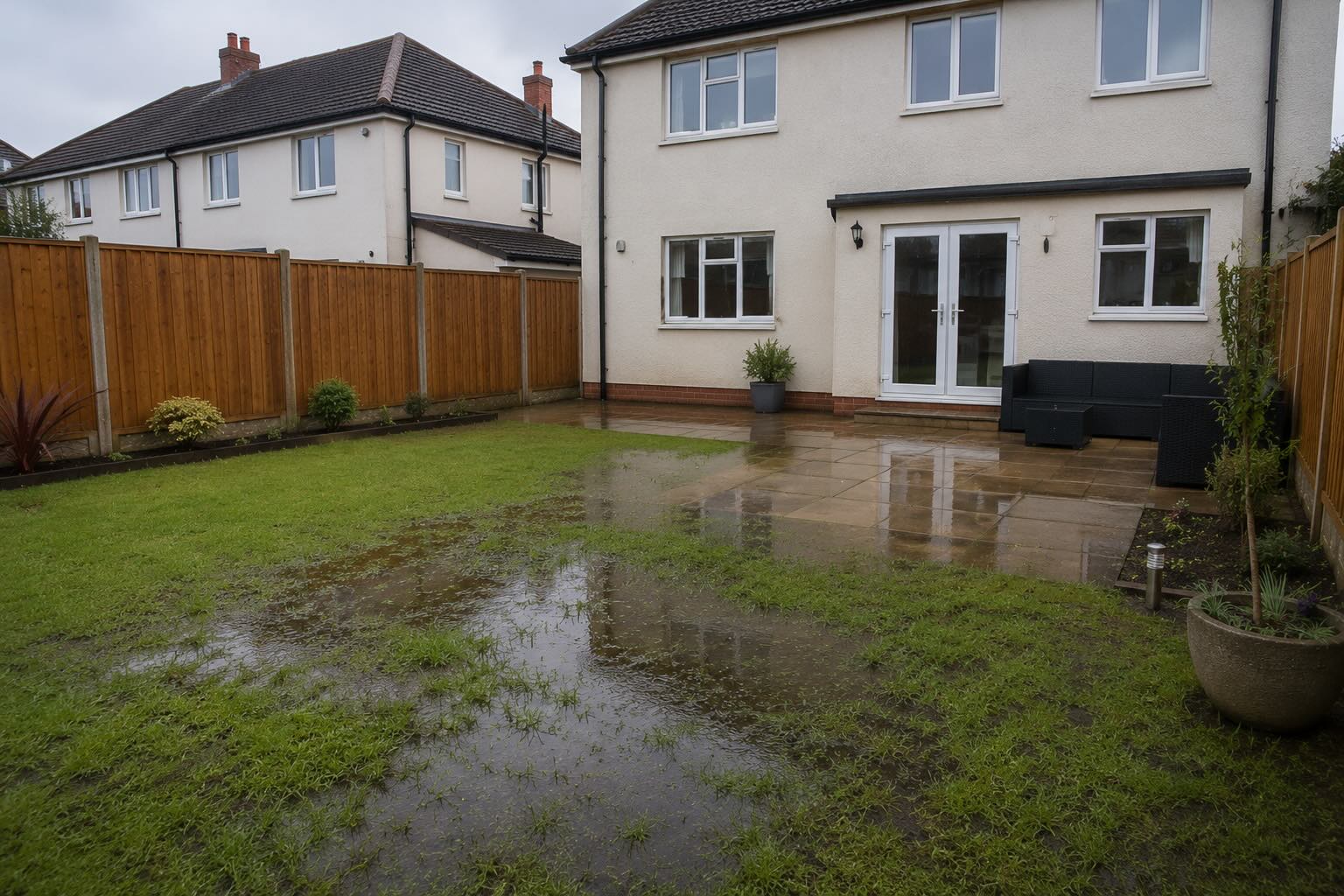
Many homeowners ask, “Why is my garden waterlogged?” especially after heavy rain or during the colder months. A garden that regularly holds water can quickly become muddy, difficult to use and damaging to lawns, plants and paved areas.
This article explains why garden drainage problems happen, what signs to look for and some of the common checks homeowners can make before deciding whether professional drainage advice is needed.
How to Tell If Your Garden Is Waterlogged
Not every wet lawn needs a full drainage system, but repeated standing water is usually a sign that water is unable to escape properly.
Common signs of poor garden drainage include:
- Puddles that remain for days after rainfall
- A lawn that feels soft, boggy or spongy underfoot
- Muddy areas that do not dry out properly
- Moss growth across the lawn
- Grass that struggles to grow or turns yellow
- Water collecting near patios, paths, walls or buildings
- Soil that feels compacted and heavy
Why Do Gardens Become Waterlogged?
A waterlogged garden usually happens when rainwater cannot drain away quickly enough. This may be caused by the soil type, the layout of the garden or changes made to surrounding outdoor areas.
- Clay soil: Clay holds water for longer than lighter, free-draining soil.
- Compacted ground: Foot traffic, machinery or building work can make it harder for water to soak away.
- Poor garden levels: Low areas of the garden may naturally collect water after rain.
- Neighbouring gardens: Water can run in from higher ground or nearby properties.
- Hard landscaping: Patios, paths and driveways can change how water moves through a garden.
Why New Build Gardens Often Hold Water
Drainage problems are particularly common in newer housing developments. Gardens may be smaller, houses are often built close together and the soil can become heavily compacted during construction.
In some new build gardens, clay soil, compacted subsoil and limited natural drainage routes mean water has nowhere to go. This can leave lawns boggy, patios slippery and planting areas struggling to establish.
Can Poor Drainage Damage Your Garden?
Poor drainage can affect more than just the appearance of a garden. If water sits on the surface for long periods, it can damage lawns, weaken plants and make outdoor areas and gardens unpleasant or impossible to use.
- Damaged or thinning lawns
- Moss and weed growth
- Rotting plant roots
- Slippery patios and pathways
- Persistent mud around seating areas and access routes
- Water collecting close to buildings or boundary walls
Simple Things Homeowners Can Check First
Before assuming a full drainage system is needed, there are a few simple checks that may help identify the cause of the problem.
- Check whether gutters and downpipes are blocked or overflowing
- Look for water being discharged into the garden from roofs, sheds or garages
- Check whether patios or paths slope towards the lawn or house
- Look for blocked drains, channels or gullies
- Check whether the lawn has become heavily compacted
- Notice whether water is entering from a neighbouring property or higher ground
What Can Help Improve Poor Garden Drainage?
The right approach depends on why the water is collecting in the first place. Some gardens may benefit from lawn aeration or improved soil structure, while others may need more detailed drainage work.
- Improving soil structure where the problem is minor
- Aerating compacted lawns
- Changing levels so water moves away from problem areas
- Using permeable paving materials where suitable
- Installing underground drainage where water cannot escape naturally
- Directing excess water towards a suitable drainage point
Because every garden is different, drainage problems should be assessed properly before any work is carried out.
When Should You Seek Professional Drainage Advice?
You should consider professional advice if your garden regularly floods, holds water for several days after rain or remains boggy even during drier weather. It is also sensible to get advice before laying new turf, installing a patio or carrying out larger landscaping work if drainage is already a concern.
For more information about professional drainage surveys, French drains, land drains, soakaways and waterlogged lawn solutions, visit our garden drainage service page.
Get in Touch
Please contact Green Onion Landscaping for advice or a free quotation.
📞 Call us on:
Request a Free Quotation Online
Green Onion Landscaping provides landscaping services throughout Stockton-on-Tees, Middlesbrough, Darlington, Teesside, County Durham and North Yorkshire. Contact us today to discuss your project or request a free quotation.